Company News
Your location:
Home »
News »
Company News
What issues should be considered when selecting sofa production machinery?
Author:Xinqinli / Date:2025-06-10
When selecting sofa production machinery, the core is to match production processes, capacity, and budget, while considering stability, adaptability, automation, and after-sales service. It is important to avoid focusing solely on low prices and ignoring long-term costs.
I. First, clarify your own needs (premise of model selection)
Production scale and capacity: small batch customization / mass production, determine single shift / daily output, match equipment efficiency.
Product type: Fabric / Leather / Functional / Recliner, different products correspond to different equipment (such as cotton filling, foam, cutting, frame processing).
Process route: frame (solid wood / plywood) → cutting → sponge / filling → sewing → assembly → packaging, selecting equipment according to the process.
Factory building conditions: area, floor height, load-bearing capacity, power supply (380V), air source, environmental protection requirements.
II. Key points for core equipment selection (by process)
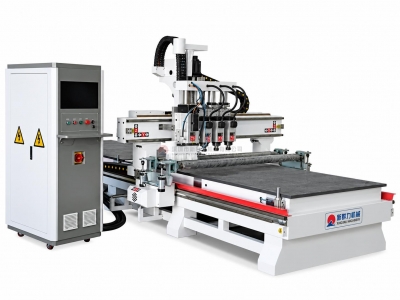
1. Frame processing equipment (cutting, drilling, assembly)
CNC cutting machine / electronic saw:
Precision: Cutting error ≤ 0.5mm, with precise hole positioning.
Efficiency: Four-process / dual-spindle drilling and milling machine / machining center, selected based on production output (50–70 boards/day).
Compatible with: multi-layer boards, solid wood, and MDF, supports irregular shape cutting.
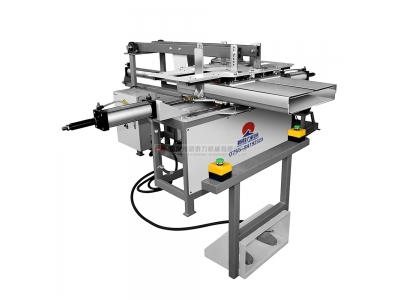
Nailer / Assembly equipment:
Stability: Pneumatic/hydraulic, precise positioning, reducing human error.
Safety: anti-pinch, emergency stop, protective cover.
2. Fabric cutting equipment (cutting cloth/leather)
Fully automatic cutting machine (vibrating blade / circular blade):
Cutting capability: speed, thickness (≤40mm), accuracy.
Material compatibility: leather, fabric, non-woven fabric, wool fabric, etc.
Intelligence: automatic feeding, vacuum adsorption, intelligent typesetting (improving utilization rate).
Durable: The bed, guide rails, and racks are precision-machined, ensuring long-term stability and resistance to deformation.
3. Filling and sponge processing equipment
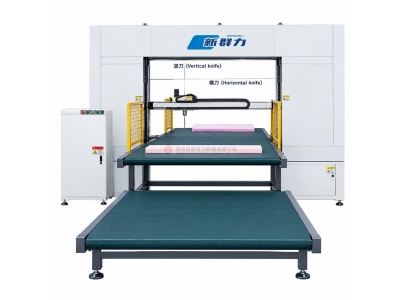
Sponge cutting machine (flat cutting / vertical cutting / irregular shape cutting):
Precision: Small dimensional error and smooth cutting surface.
Efficiency: cutting speed, scrap rate.
Cotton filling machine / assembly line:
Compatible with: down, toy cotton, fiber, and foam scraps.
Uniformity: Consistent packing density, with no agglomeration.
Environmental protection: dust removal and anti-scattering.
Polyurethane foam machine (bean bag chair / one-piece molding):
Proportioning accuracy: stable flow control.
Efficiency: foaming speed, production capacity.
Stability: Low failure rate and easy maintenance.
4. Sewing and assembly equipment
Computerized flat sewing machine / edging machine / synchronizing sewing machine:
Speed, stable stitching, and low noise.
Thick material capability: compatible with sofa fabric/sponge layer.
Skinning machine / pneumatic tool:
Efficient, labor-saving, and with good consistency.
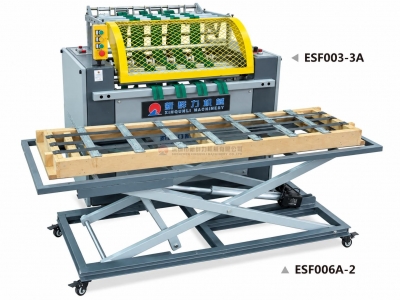
5. Packaging and downstream equipment
Compressor / Vacuum packing machine:
Compression force, workbench size, speed.
Compatible with: fabric / leather / solid wood frame sofas.
Energy consumption: Priority given to first-level energy efficiency.
III. Core Principles for General Model Selection (A Must-Read for All Equipment)
1. Stability and durability (key to long-term production)
Material of the body: thick steel plate/cast iron, precision machining, no deformation.
Core components: motors (servo/stepper), PLC, guide rails, bearings, and pneumatic components are selected from reputable brands.
Failure rate: low, easy to maintain, reducing downtime.
2. Adaptability and compatibility
Material compatibility: Fully covers fabric, sponge, frame, and filler.
Production line compatibility: It can smoothly interface with existing equipment/assembly lines.
Customization: Supports switching between irregular and multi-specification products.
3. Automation and intelligence (cost reduction and efficiency improvement)
Automatic loading and unloading, automatic positioning, automatic compensation, and data networking.
Touch screen operation, one-click model change, fault diagnosis, and production statistics.
Reduce labor, lower skill requirements, and enhance consistency.
4. Operation and maintenance
The interface is user-friendly and easy to learn, resulting in low training costs.
Simple maintenance: easy to disassemble and clean, easy to replace parts, and clear maintenance intervals.
Spare parts are universal and easy to procure, with quick maintenance response.
5. Safety and environmental protection
Safety devices: emergency stop, protective cover, safety door, overload protection, and electric leakage protection.
Environmental protection: low noise, low dust, low energy consumption, and waste gas treatment (foaming).
Complies with national standards / CE certification.
6. Cost and return on investment (overall accounting)
Initial investment: equipment cost + installation + commissioning + training.
Operating costs: electricity, gas supply, consumables, maintenance, labor.
Lifespan and depreciation: The design lifespan is 8-10 years, and a low failure rate leads to a high residual value.
ROI: Calculate the payback period (usually 1-2 years).
7. Suppliers and after-sales service (long-term guarantee)
Qualifications: factory scale, research and development capability, industry experience, customer cases.
After-sales: warranty period (1-2 years), on-site service, spare parts inventory, 24-hour response.
Training: Training on operation, maintenance, and troubleshooting.
Word of mouth: peer evaluation, market share.
IV. Selection steps (avoidance process)
Organize the production process and capacity, and compile a list of equipment.
Select 3-5 suppliers and request proposals and quotations.
Conduct on-site inspections of factories, observe prototypes, production processes, and after-sales services.
Test the machine with materials to verify its accuracy, efficiency, and stability.
Discussing the contract: Clarify the parameters, delivery date, installation, training, after-sales service, quality assurance, and spare parts pricing.
Acceptance: Check item by item according to the contract, and ensure no malfunction during 72 hours of trial production.
V. Common Misconceptions
Only considering the price, while ignoring stability and after-sales service (which leads to higher maintenance costs in the later stage).
The equipment is either too large or too small, resulting in a mismatch in production capacity (leading to waste or bottlenecks).
Without testing the machine, you might find out after purchasing it that it's not suitable for your own materials.
Ignoring the conditions of the factory building (story height, load-bearing capacity, power supply) leads to the inability to install.

 全国咨询热线:



 关注我们
关注我们 86-755-84192323
 在线客服
在线客服 企业邮箱
企业邮箱